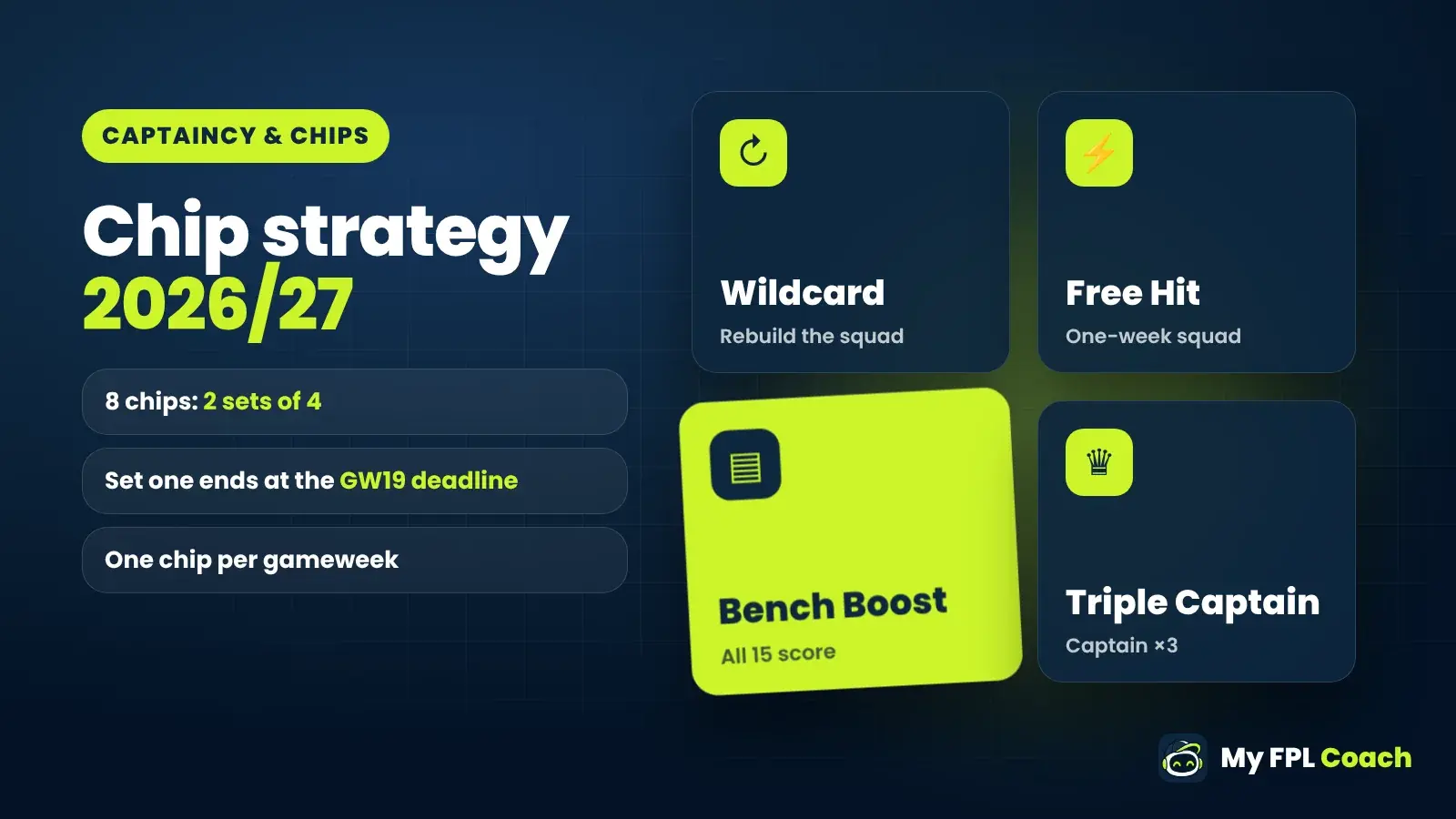
The short answer: in 2026/27 you have two sets of four chips. Play the Wildcard when three or more players need replacing, save the Free Hit for a gameweek when many of your players don't have a match, play Bench Boost in a double gameweek with four nailed-on substitutes, and use Triple Captain on a premium player with two matches or one very kind one. The first set must be used before the Gameweek 19 deadline.
Chips are the biggest single swings in FPL. A well-timed Bench Boost can add 20 points or more in one week; a wasted one adds three. The rules for 2026/27 are the same as last season, which means the same deadline pressure: a chip you're "saving" in the first half becomes worthless at the halfway point.
The 2026/27 chip rules
According to the Premier League's chip guide for 2026/27:
- Every manager has eight chips: two sets of Wildcard, Free Hit, Bench Boost and Triple Captain.
- The first set must be used before the Gameweek 19 deadline, 13:30 GMT on Saturday 2 January. Unused first-half chips don't carry over.
- The second set refreshes for the rest of the season.
- Only one chip can be played in a gameweek.
- The Free Hit can't be played in Gameweek 1, and if your first Free Hit is used in Gameweek 19, the second can't be used in Gameweek 20.
| Chip | What it does | Best moment | Avoid |
|---|---|---|---|
| Wildcard | Unlimited free transfers; the new squad stays | Three or more problems, or before a fixture swing | Fixing one or two issues normal transfers can handle |
| Free Hit | Unlimited transfers for one week; squad reverts | Blank gameweeks, or a double your squad isn't built for | Normal weeks, where the gain is small |
| Bench Boost | All 15 players score | Double gameweeks with four nailed starters on the bench | A bench with a non-playing keeper or doubtful players |
| Triple Captain | Captain scores triple | A premium player with two fixtures, or a very kind single one | Chasing last week's haul |
Wildcard: rebuild, don't patch
The Wildcard lets you change your whole squad without a points cost. It's at its best when the team has several problems at once: injuries, players losing their place, and fixtures turning against your clubs.
Good reasons to play it:
- Three or more players you'd sell, especially injured or rotated ones.
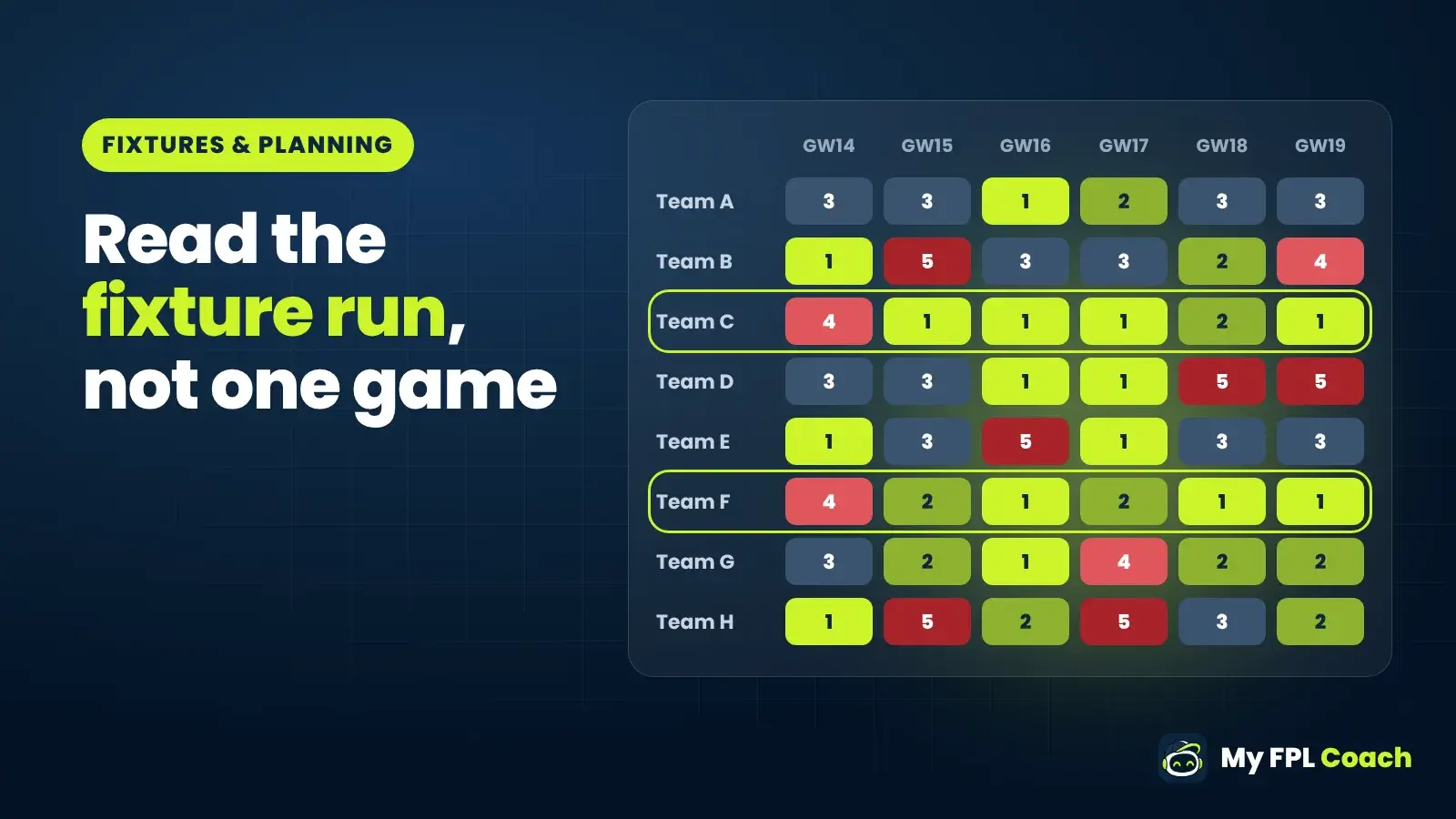
- A run of good fixtures for clubs you don't own. Use the fixture planner to spot them.
- A week or two before a planned Bench Boost, so the squad you build is ready for it.
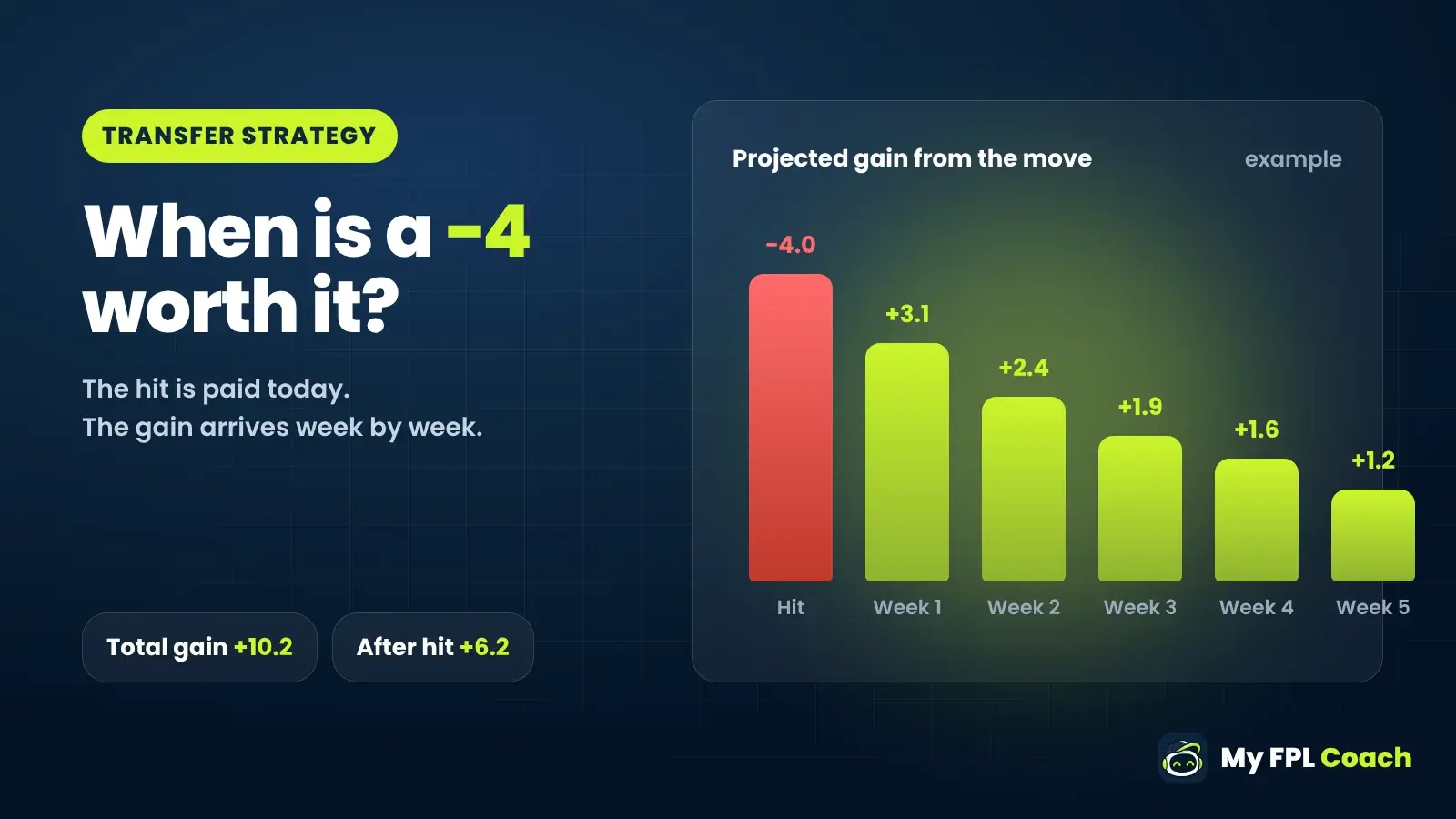
If one or two transfers would fix the team, use free transfers instead. Paying a hit for a single urgent move is often fine; paying several in one week usually means a Wildcard was the better tool. Our guide to hits explains where that line sits.
Free Hit: the one-week squad
The Free Hit gives you a completely different squad for one gameweek, then puts your old one back. That makes it a rescue chip. Its classic use is a blank gameweek, when cup ties or postponements leave several clubs without a match and many of your starters with nothing to play for.
Because your squad returns the week after, the Free Hit lets you ignore the long term completely for one week: pick whoever has the best fixture that weekend, even if you'd never keep them.
In a normal gameweek, a one-off squad rarely beats yours by more than a few points, so playing it there wastes a chip that could save you ten or more in a blank.
Bench Boost: when all 15 score
Bench Boost counts your substitutes' points. It works best in a double gameweek, when bench players can get two matches each, and only when all four are likely to start. A non-playing backup goalkeeper or a rotation-risk defender on the bench can cost you most of the chip's value.
The most effective pattern is Wildcard, then Bench Boost: use the Wildcard a week or two earlier to build 15 players who all start in the double.
Triple Captain: certainty first
Triple Captain adds one more multiple of your captain's points. The ideal target is a premium player with two matches in a gameweek, or one match against the weakest defence in the league. Above all, minutes must be certain: no rotation risk and no doubt over fitness.
It's tempting to play it on the player who just scored a hat-trick. Pick the fixture instead. Our captain picker shows projected points for the top options each week.
A simple plan for the first half
With the first set expiring at the Gameweek 19 deadline, a chip that's still unused in December needs a plan:
- Look at the next few gameweeks now. Does any week have more fixtures than usual, or fewer?
- Match each chip to a week. Pencil in a week for each chip, even if it changes later. The chips planner in the app lets you do this and shows the best projected week for each chip.
- Don't stack them. One chip per gameweek, so plan around four separate weeks if you still hold all four.
- If nothing obvious comes up, still play them. A Bench Boost in an ordinary week is worth a few points. An expired chip is worth nothing.
The second set then works the same way across the rest of the season, when double and blank gameweeks tend to cluster in the spring.
Key takeaways
- Eight chips in 2026/27: two sets of Wildcard, Free Hit, Bench Boost and Triple Captain.
- First set expires at the Gameweek 19 deadline (13:30 GMT, Saturday 2 January). One chip per gameweek.
- Wildcard for three or more problems; Free Hit for blanks; Bench Boost in doubles; Triple Captain on certain minutes.
- An imperfect chip beats an expired one.
Plan your chips with My FPL Coach
The chips page in My FPL Coach projects how many points each chip would add in each upcoming gameweek for your squad, and highlights the best week for each. Enter your Team ID in the app to see it, or read the full list of 2026/27 changes from the Premier League.