The short answer: take a hit only when the transfer's projected gain over the weeks you'll keep the player is clearly bigger than 4 points. A good working threshold is around 6 projected points, because the −4 is certain and the gain is only an estimate. If the gain is smaller, roll the transfer instead.
Hits are where a lot of good seasons quietly go wrong. A manager makes two transfers that each look sensible, pays 4 points, and is pleased when the new player scores. But the useful question is different: did the move score more than 4 points more than the player it replaced would have? Usually that's much harder to see.
What a hit costs
You get one free transfer each gameweek and can bank up to five, as the Premier League confirmed for 2026/27. Every transfer beyond the free ones costs 4 points, taken off that gameweek's score. Two extra transfers cost 8, three cost 12. The FPL community calls this a "hit", and the official FPL glossary explains other common terms you'll see.
Two features of the cost make hits risky:
- It's paid immediately. The points are gone the moment the gameweek starts, whatever happens on the pitch.
- It's certain. The gain is a projection that can be wiped out by a rotation, an injury or a goalkeeper having a great day.
The break-even rule
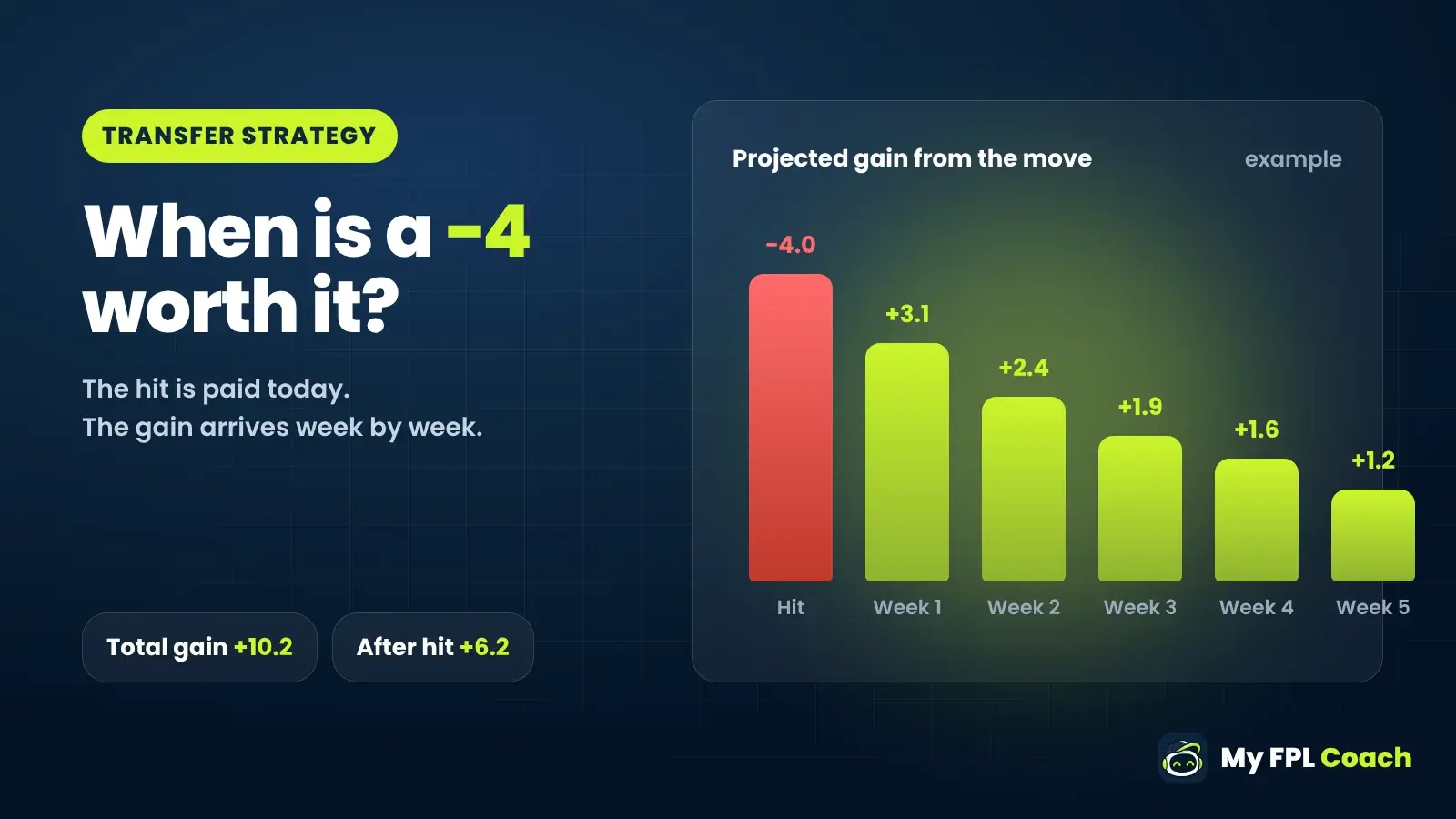
Compare the projected points of the player coming in with the projected points of the player going out, over the same gameweeks. The difference is the gain from the move. A hit pays when that gain is bigger than 4.
The key detail is the time window. Most moves aren't one-week moves. If you buy a player you'll keep for five gameweeks, the gain builds up over all five.
| Gameweek | Player in | Player out | Gain |
|---|---|---|---|
| Week 1 | 6.4 | 3.3 | +3.1 |
| Week 2 | 5.9 | 3.5 | +2.4 |
| Week 3 | 5.2 | 3.3 | +1.9 |
| Week 4 | 5.0 | 3.4 | +1.6 |
| Week 5 | 4.6 | 3.4 | +1.2 |
| Total | +10.2 |
Illustrative projections for a typical "injured or out-of-form player out, in-form player with good fixtures in" move.
In this example the move gains 10.2 projected points over five weeks. After the 4-point hit, it's still worth about 6.2. That's a hit worth taking. But notice how the gain shrinks each week: projections further ahead are less certain and fixtures change. A move that only gains +1 a week needs four weeks just to break even.
Why the threshold is 6, not 4
Projections are averages. A forward projected for 5 points might score 2 or 13. When the gain only just clears 4, you're paying a certain cost for a coin-flip benefit. Building in a margin of about 2 points protects you from the moves that look good on paper and don't work out.
There's a second cost that's easy to forget: the free transfer you'd otherwise have rolled. A banked transfer next week has value, because it lets you react to injuries without paying. Our guide on when to roll a transfer explains how My FPL Coach puts a points value on that flexibility.
When a hit usually makes sense
- A starter is out for weeks and you have no playing cover. A player who scores 0 for three weeks is an easy upgrade to beat.
- A double gameweek. A player with two matches in one week roughly doubles his expected points that week, which can turn a marginal move into a clear one.
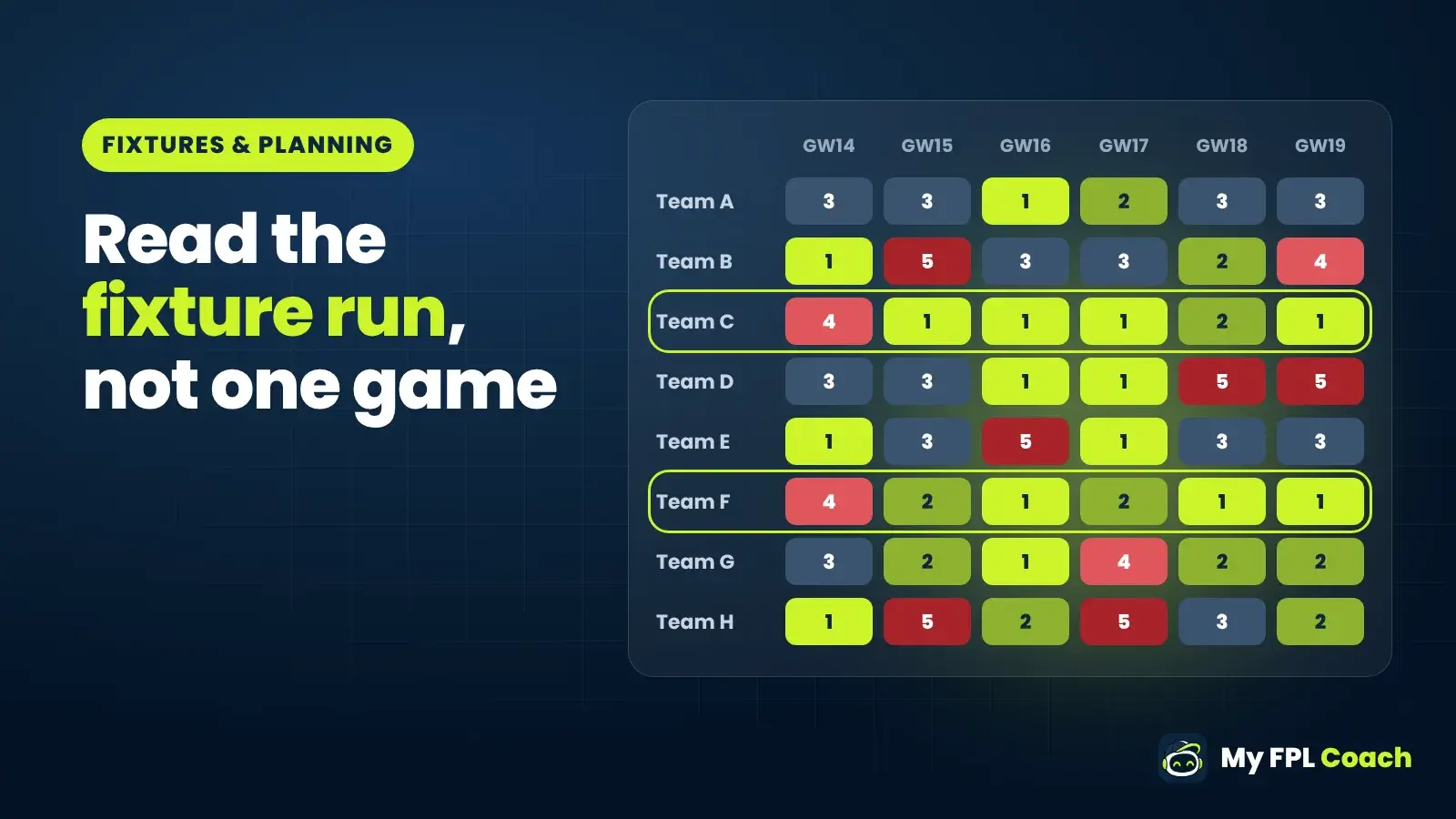
- A long run of kind fixtures. A player whose next five games are all against weak defences can repay a hit over time. Check the fixture planner first.
- You're a premium player short. If almost every top manager owns a player who keeps scoring, not owning him is a risk in itself. That's about ownership, not just points; our guide to effective ownership explains it.
When to roll instead
- The player out only misses one match and your bench player will start in his place.
- You're reacting to one big score. One haul says little about the next five weeks.
- The gain is under about 1.5 points a week and you'd keep the player only briefly.
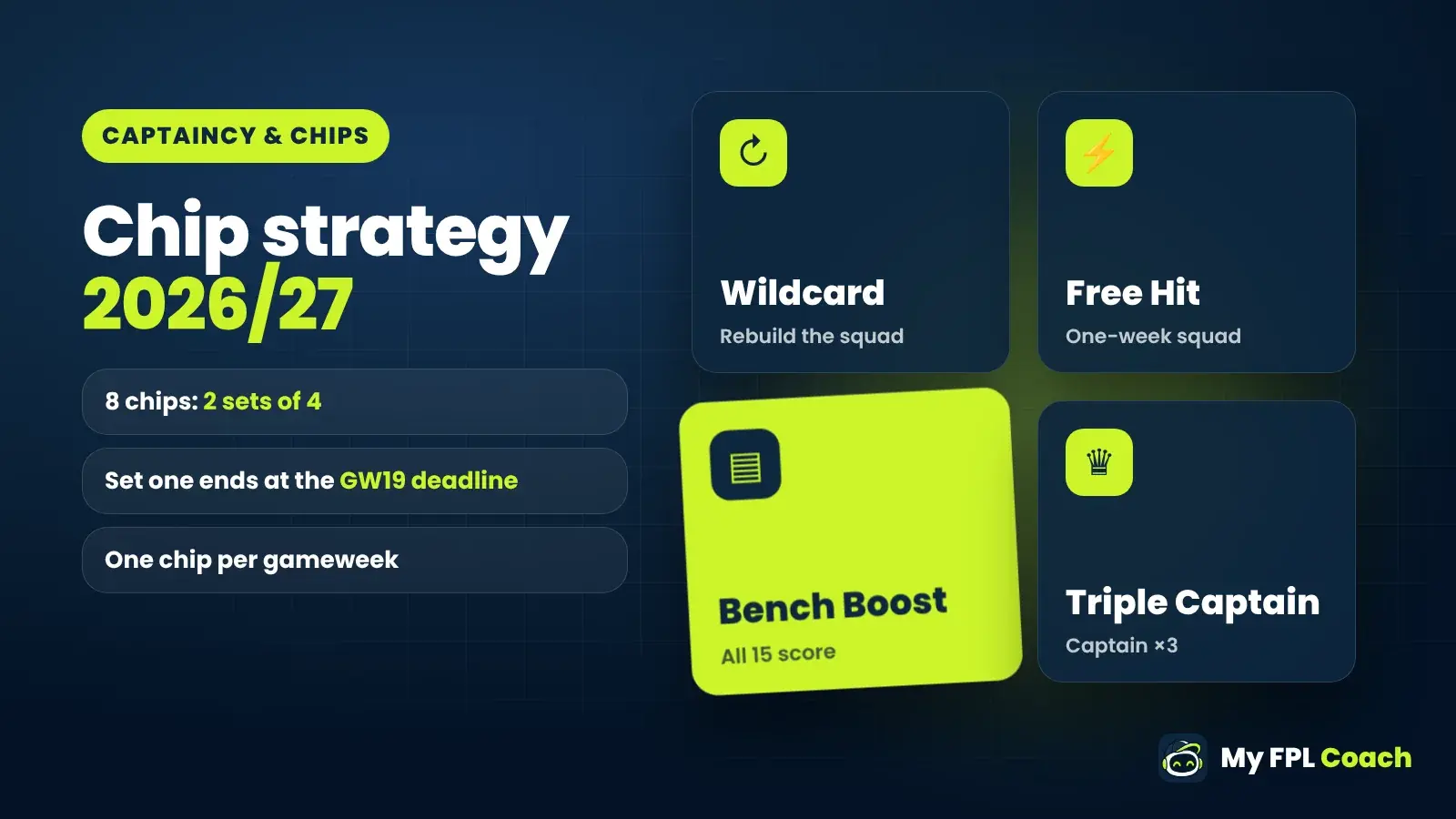
- You need three or more changes. That's a job for a Wildcard, not a string of hits. See our chip strategy guide.
A quick checklist before you confirm
- Is the player coming in almost certain to start? Check the latest team news.
- Over how many gameweeks will you keep him?
- Is the total projected gain over those weeks at least 6 points?
- Would rolling the transfer give you a better move next week?
- Does a chip solve the problem more cheaply?
Key takeaways
- A hit costs 4 points for each transfer beyond your free ones, paid immediately.
- Judge a move by its total projected gain over the weeks you'll keep the player.
- Aim for around 6 projected points before paying a −4.
- Rolling a transfer has value; a Wildcard beats several hits.
Let the numbers decide
Doing this by hand for every possible move takes a long time. The My FPL Coach transfer planner tests every legal transfer for your squad, compares each one with rolling, and shows whether a hit pays back over your chosen planning window. The how-to guide shows each setting, including the No hits option.