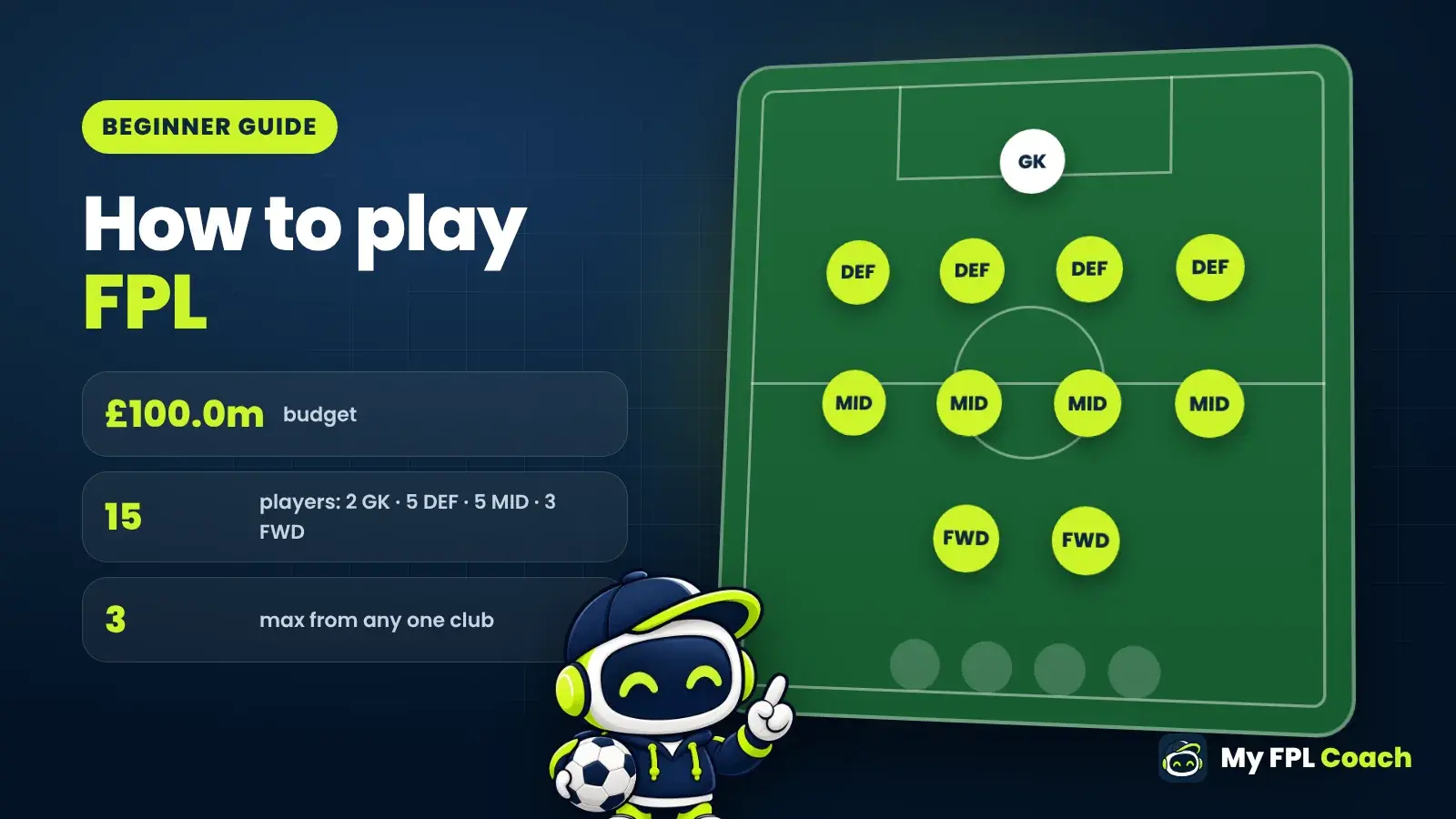
The short answer: in Fantasy Premier League you pick 15 real Premier League players with a £100.0m budget, no more than three from any club. Each gameweek, 11 of them score points for what they do on the pitch: playing, scoring, assisting, keeping clean sheets and defending. Your captain's points count double, and you can make one free transfer a week.
That covers the basics. The rest of this guide explains each rule in the order you'll meet it, then the habits that separate a decent first season from a frustrating one. Everything here reflects the 2026/27 rules as published by the Premier League.
What Fantasy Premier League is
Fantasy Premier League (FPL) is the official fantasy game of the Premier League, and it's open to everyone. You act as manager of a squad of real players. When those players play well in real matches, your team scores points. You compete against everyone else in the game, and in private mini-leagues with friends, colleagues or your own community.
The season is split into 38 gameweeks, one for each round of Premier League fixtures. Before each gameweek's deadline you can change your team. After the deadline your team is locked until the next one.
Building your squad: the rules
Every squad follows the same rules, so the challenge is in how you spend the money.
| Rule | 2026/27 |
|---|---|
| Budget | £100.0m |
| Squad size | 15 players: 2 goalkeepers, 5 defenders, 5 midfielders, 3 forwards |
| Players per club | Maximum 3 |
| Starting eleven | 1 goalkeeper, 3–5 defenders, 2–5 midfielders, 1–3 forwards |
| Bench | 4 players, who come on automatically if a starter doesn't play |
The budget is tight on purpose. You can't afford every star, so most managers build around a few premium players and fill the rest with good-value picks who play every week. A cheap player who starts every match is worth more than a pricier one who keeps getting rotated.
Your bench matters more than new managers expect. Automatic substitutions happen in bench order, so put your most reliable starter first. A goalkeeper on the bench only replaces your starting goalkeeper.
How FPL points are scored
Points depend on a player's position. Goals by defenders are worth more than goals by forwards, because they're rarer. Clean sheets matter most for goalkeepers and defenders.
| Action | Defender | Midfielder | Forward |
|---|---|---|---|
| Playing up to 59 minutes | 1 | 1 | 1 |
| Playing 60 minutes or more | 2 | 2 | 2 |
| Goal | 6 | 5 | 4 |
| Assist | 3 | 3 | 3 |
| Clean sheet (60+ minutes) | 4 | 1 | 0 |
| Defensive contribution (once per match) | 2 (10 actions) | 2 (12 actions) | 2 (12 actions) |
| Every 2 goals conceded | −1 | 0 | 0 |
| Yellow card / red card | −1 / −3 | −1 / −3 | −1 / −3 |
| Own goal / penalty missed | −2 / −2 | −2 / −2 | −2 / −2 |
| Bonus points | 3, 2 or 1 for the best three performers in each match | ||
Goalkeepers score like defenders for clean sheets and goals conceded, earn 1 point for every 3 saves and 5 for saving a penalty. The official FPL rules list every value, including goalkeeper goals.
Defensive contributions
Since 2025/26, players also earn points for defensive work. A defender who makes 10 clearances, blocks, interceptions and tackles (CBIT) in a match earns 2 points. Midfielders and forwards need 12, and ball recoveries count for them too. It's capped at 2 points per match. The Premier League explains how defensive contributions work in more detail. Our short guide to defensive contributions covers which players benefit.
Bonus points
After every match, the three best performers by the Bonus Points System get 3, 2 and 1 extra points. From 2026/27, projected bonus appears in live scores 20 minutes into a match and keeps changing until full time. The system was also adjusted this season, so goalkeepers, full-backs and attacking players have a better chance of bonus, according to the Premier League's summary of the 2026/27 changes.
Captain and vice-captain
Each gameweek you choose a captain, whose points count double, and a vice-captain, who takes over the armband if your captain doesn't play. Captaincy is the single biggest decision you make each week. A premium forward scoring 12 points gives you 24 as captain. Pick the wrong player and you can fall well behind in one weekend.
Good captains combine three things: they're almost certain to play, they're on penalties or take lots of shots, and they face a weak defence. Our captain picker ranks the options for this gameweek with projected points.
Transfers
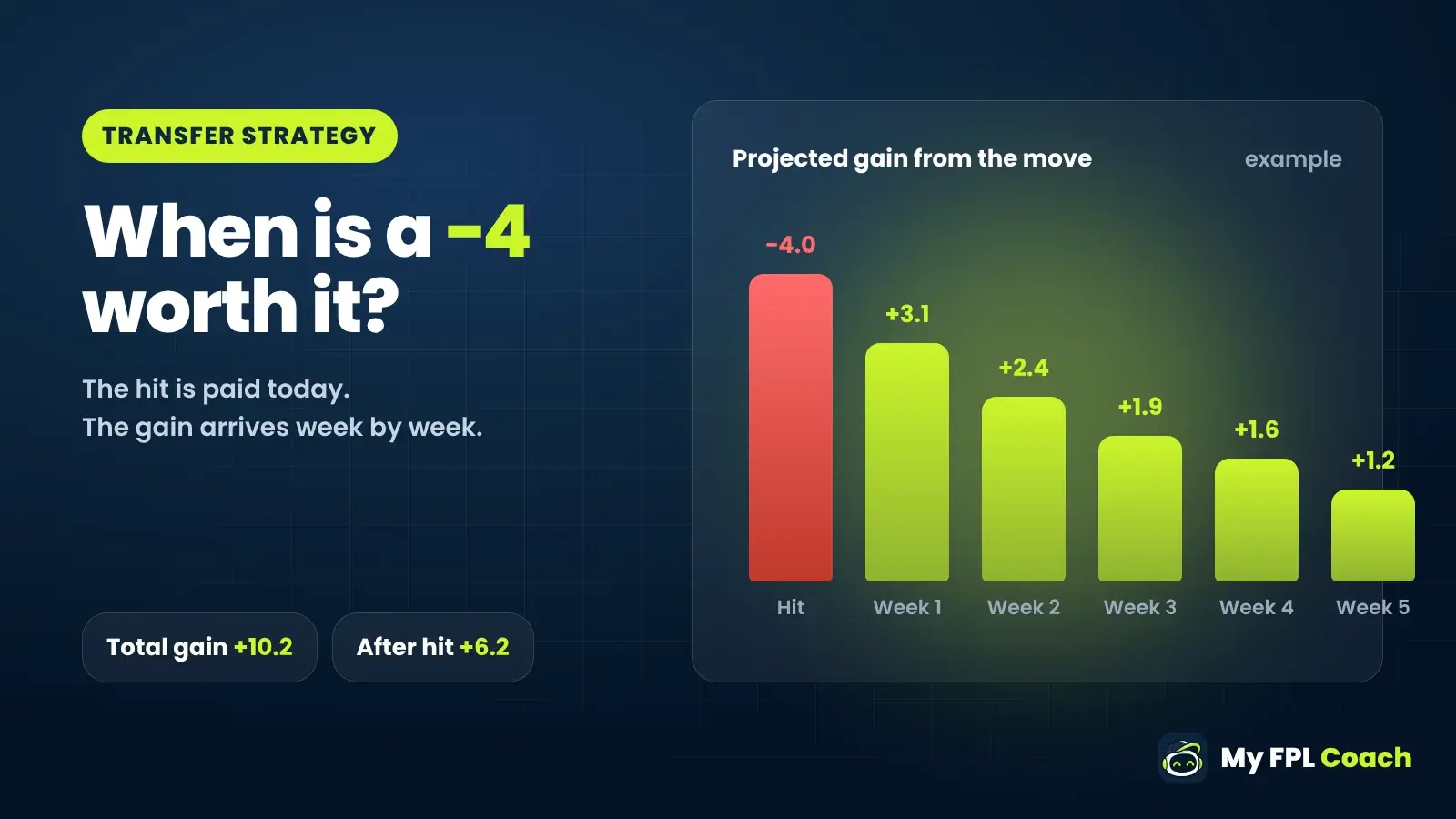
You get one free transfer each gameweek. If you don't use it, it rolls over, and you can bank up to five. Any transfer beyond your free ones costs 4 points, known as a "hit".
- Roll when the best move is marginal. A spare transfer next week has real value. See when to roll a transfer.
- Take a hit only for a clear gain. The cost is certain; the gain is a projection. Our article on when a −4 is worth it works through the maths.
- Prices change. Player prices rise and fall with transfer demand. When you sell, you keep only half of any rise, rounded down to the nearest £0.1m. A new price change predictor in the game shows likely risers and fallers each day.
Chips: your eight one-off boosts
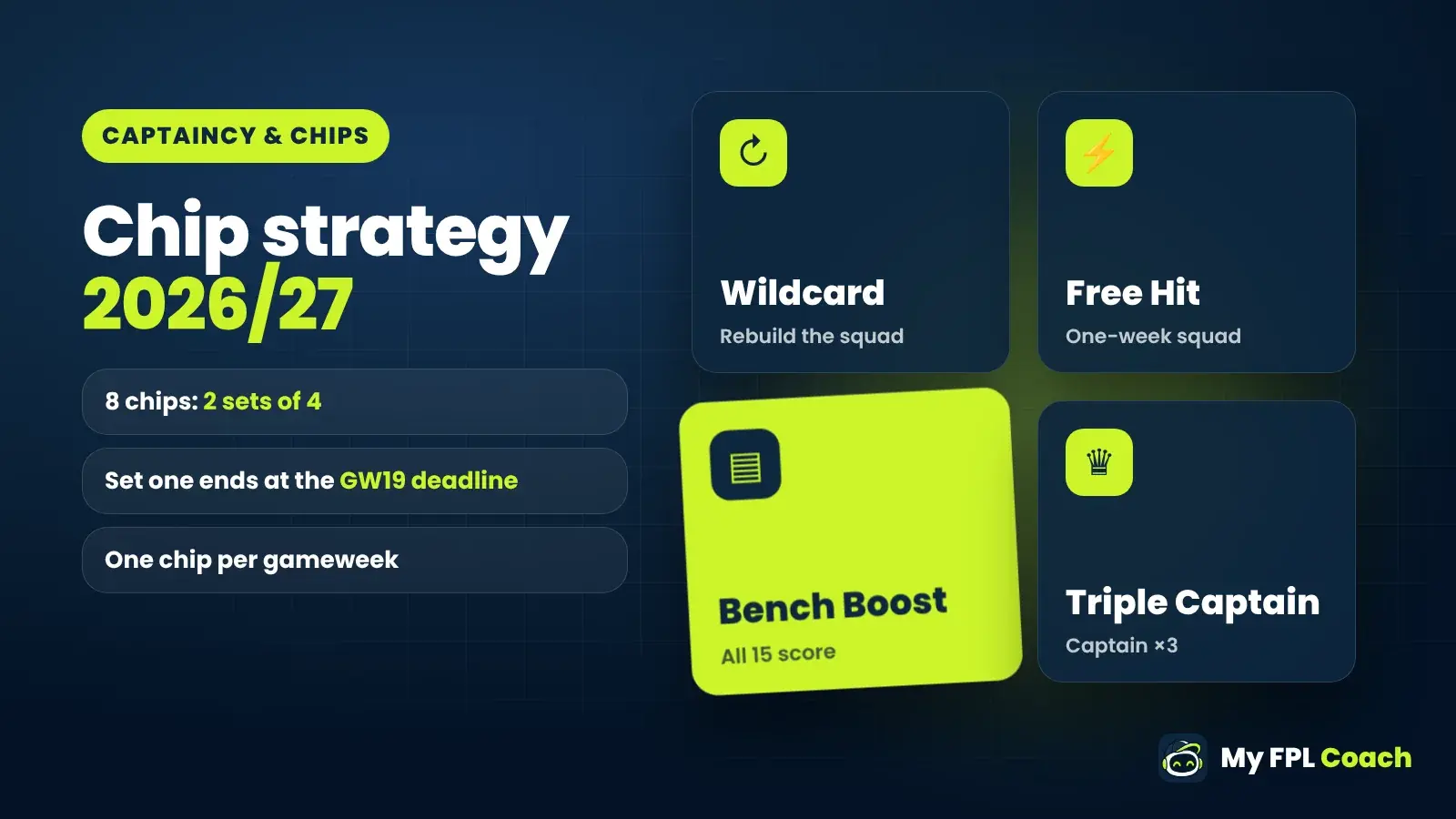
Chips are powerful one-off boosts. In 2026/27 every manager has two sets of four, eight in total. The first set must be used before the Gameweek 19 deadline, and anything unused is lost. Only one chip can be played in a gameweek.
| Chip | What it does |
|---|---|
| Wildcard | Unlimited free transfers that week. The new squad stays. |
| Free Hit | Unlimited free transfers for one gameweek; your squad returns to normal the week after. Can't be played in Gameweek 1. |
| Bench Boost | Your four bench players' points count too. |
| Triple Captain | Your captain scores triple instead of double. |
The Premier League's chip rules for 2026/27 include the exact deadline. For timing advice, read our FPL chip strategy guide.
Five mistakes new managers make
- Chasing last week's points. A player who scored a hat-trick has already earned those points for someone else. Pick for the next few fixtures, not the last one.
- Buying players who don't start. Minutes come first. A player on the bench scores nothing, however good he is.
- Taking hits every week. Four points per extra transfer adds up fast. Most weeks, one free transfer is enough.
- Ignoring the fixtures. A run of kind fixtures can matter more than form. Check the fixture difficulty before you buy.
- Forgetting the deadline. Miss it and your team simply carries over, captain and all. Set a reminder.
Key takeaways
- £100.0m buys 15 players; no more than three from one club.
- Points come from minutes, goals, assists, clean sheets, defensive contributions and bonus.
- Your captain's points double, so it's the biggest weekly decision.
- One free transfer a week, bank up to five, and every extra transfer costs 4 points.
- Eight chips in two sets of four; the first set expires at the Gameweek 19 deadline.
Where to go next
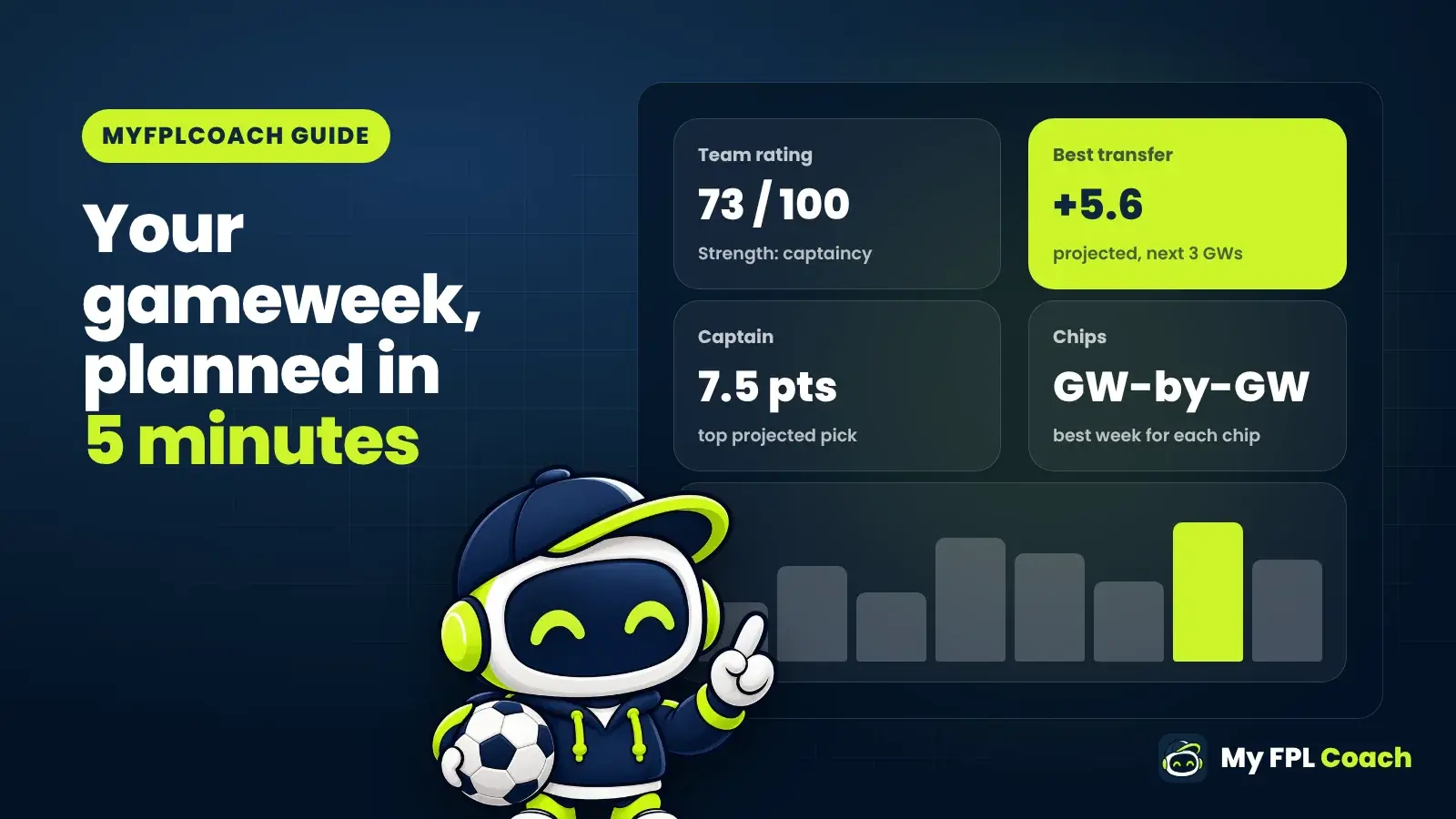
Once your squad is picked, find your Team ID and rate your team. My FPL Coach scores your squad out of 100 and points out the gaps. When you're ready to plan a full week, our guide to planning your gameweek in five minutes walks through it step by step.